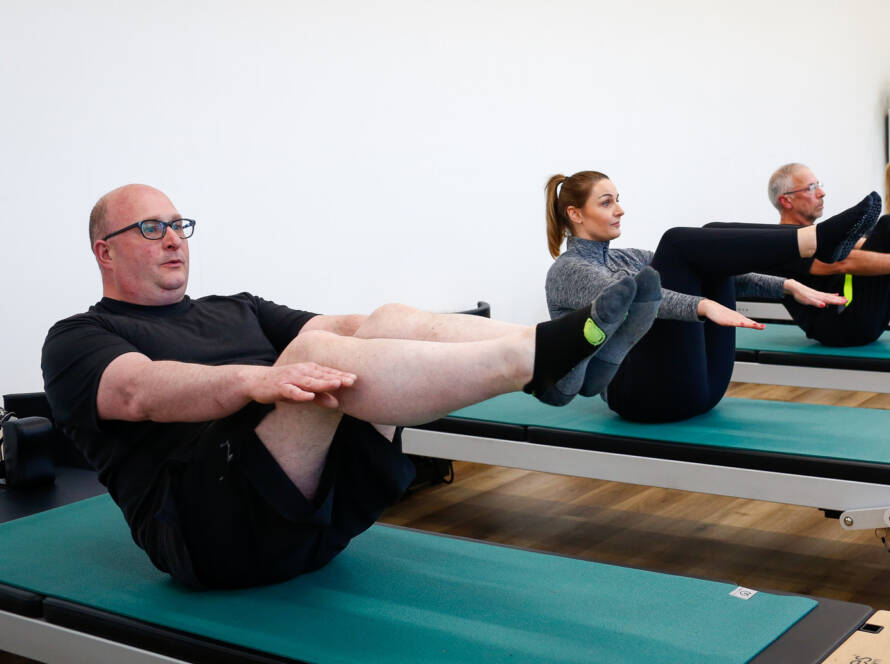
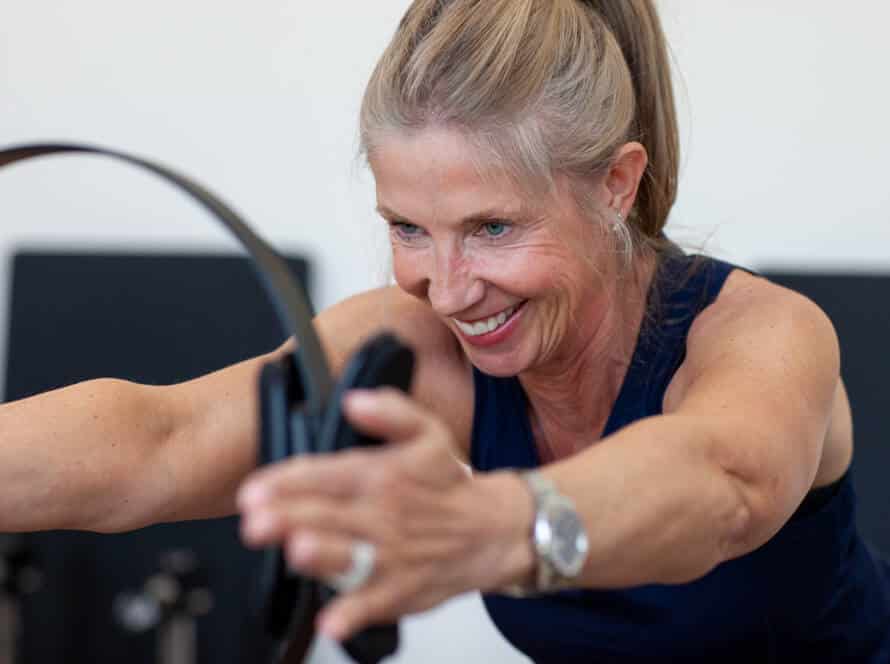
Yes, you can absolutely do Reformer Pilates at 80 years old. In fact, Pilates is highly recommended for older adults because it is a low-impact exercise that can be entirely customized to your body’s specific needs, strength levels, and mobility constraints.
Before starting any new exercise regimen, ask your GP to ensure it is safe for you individually.
How Reformer Pilates helps a stiff, aching Body
The Reformer machine uses a system of springs, pulleys, and a sliding carriage to provide adjustable resistance. This setup is uniquely beneficial for seniors experiencing age-related stiffness or joint discomfort:
- Decompresses Joints and Reduces Pain: Many Reformer exercises are performed lying down or sitting. This removes the weight of gravity from your spine and lower limbs, allowing you to move your joints through a full range of motion without putting harsh pressure on your knees, hips, or lower back.
- Lubricates Stiff Joints: Aching and stiffness often stem from a lack of joint fluid movement. The smooth, controlled gliding motions of the Reformer encourage the production of synovial fluid, which acts as a natural lubricant to ease arthritis and general stiffness.
- Strengthens Supporting Muscles: By targeting the “core” (the deep muscles of the abdomen, back, and pelvic floor), Pilates builds a strong structural foundation. Strengthening the muscles around your aching joints takes the mechanical stress off the joints themselves.
- Improves Balance and Posture: Safe movement at 80 requires excellent stability. Reformer Pilates challenges your deep stabilizing muscles and improves proprioception (your body’s awareness of its position), significantly reducing the risk of trips and falls.
What to Look For and How to Start Safely
To ensure your safety and get the most out of your sessions, keep the following guidelines in mind:
-
- Seek Specialized Classes: Look for sessions specifically for older populations, such as “Older Bodies” or “Gentle Pilates” classes. These groups move at a deliberate pace and focus heavily on age-specific longevity and mobility.
- Prioritize Small Group or 1-to-1 Sessions: Avoid large, fast-paced commercial classes. You want an environment limited to a few participants where the instructor can closely monitor your form, adjust your spring resistance, and offer physical modifications.
- Communicate Your Limitations: Always inform your instructor about your specific pain points, joint replacements, or conditions like osteoporosis or high blood pressure before the class begins. A qualified instructor will modify exercises so you never strain.
- Wear Grippy Socks: Bring a pair of non-slip, grippy socks to ensure your feet don’t slip on the Reformer carriage or footbar.